 AI Education Platform
Microsoft Launches Copilot Cowork: The Enterprise AI Agent Reshaping How Teams Work
Microsoft released Copilot Cowork, an enterprise AI agent built with Anthropic technology, designed to automate multi-step workflows across Microsoft 365 — reading, analyzing, and acting on files autonomously.
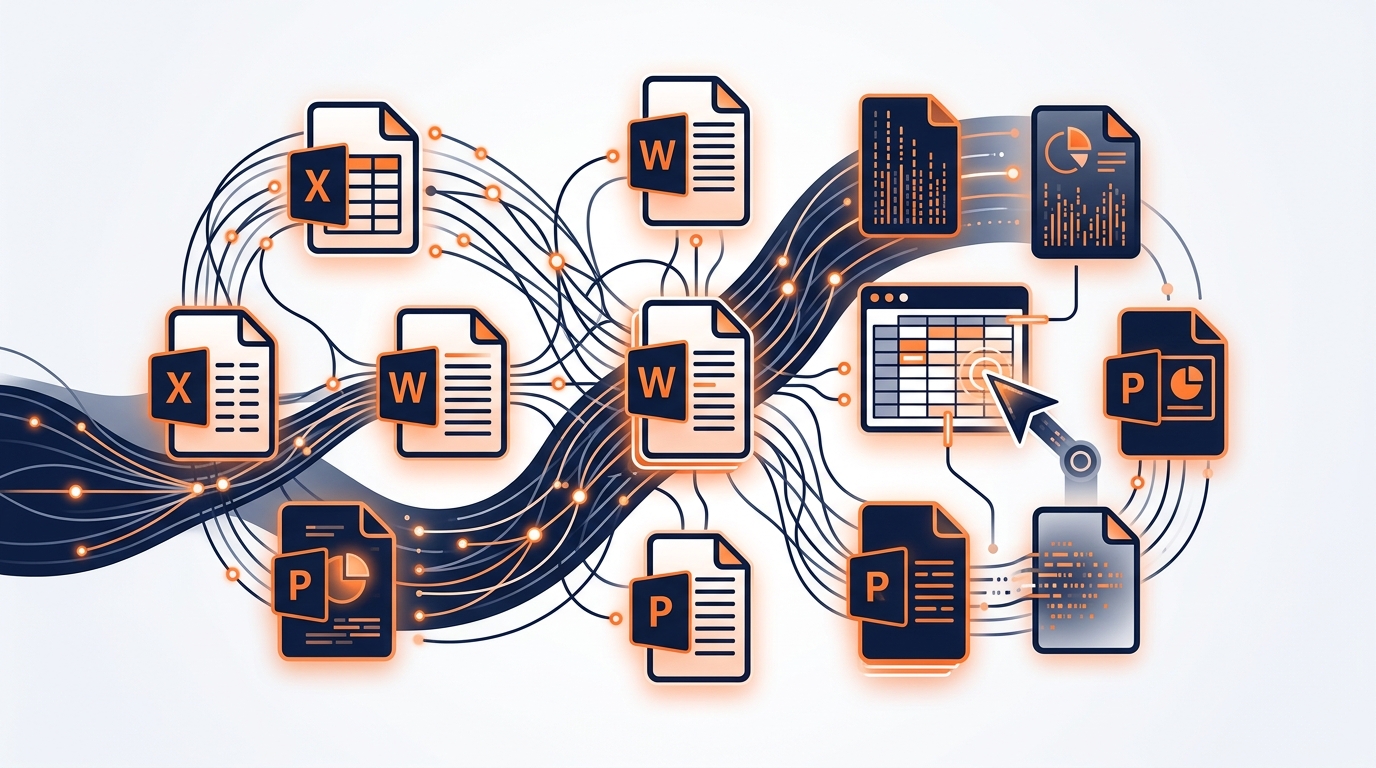
Microsoft just made its most significant AI product announcement since the original Copilot launch: Copilot Cowork — a new enterprise AI agent that doesn't just answer questions, but actively works inside your files, coordinates across apps, and executes multi-step workflows with minimal human prompting. This is not an iteration on the AI assistant you've been using. It's a fundamentally different class of tool.
Announced in March 2026 and slated to enter Microsoft's Frontier program in late March, with broader availability through Microsoft 365 E7 on May 1, 2026, Copilot Cowork has already generated significant attention across enterprise technology circles. What makes it particularly notable — and strategically interesting — is that Microsoft built it in collaboration with Anthropic, the safety-focused AI research company behind Claude. Here is everything you need to understand about Copilot Cowork, how it works, what it signals for the enterprise AI market, and what it means for every professional whose work involves documents, data, and coordination.
What Is Microsoft Copilot Cowork?
Microsoft Copilot Cowork is an agentic AI system built directly into the Microsoft 365 ecosystem. Unlike previous Copilot experiences — which were primarily conversational and reactive (you ask, it responds) — Cowork is designed to be proactive and autonomous. You assign it a goal. It works toward it across Outlook, Teams, Excel, PowerPoint, Word, and the broader Microsoft 365 suite, taking multi-step actions without requiring you to babysit every decision.
At the core of Cowork is a layer Microsoft calls "Work IQ" — a contextual intelligence system that draws continuously from your emails, meetings, chats, calendar events, and files. Work IQ gives Cowork the ability to understand not just a single document in isolation, but the full context of your role, your projects, and your organization's workflows before taking any action.
Key capabilities include:
- Autonomous file reading and analysis — Cowork reads documents, spreadsheets, presentations, and emails without requiring manual upload or copy-pasting. It works directly with your actual business content.
- Cross-app multi-step execution — Rather than acting inside a single app, Cowork can coordinate work across multiple Microsoft 365 applications in a single assigned task.
- Proactive synthesis — Given a goal, it surfaces relevant files, drafts materials, updates records, and compiles summaries across an entire data landscape — without being micro-directed.
- File manipulation — Cowork doesn't just read and report. It edits. It updates spreadsheet rows, revises document sections, generates new drafts, and reorganizes content based on what it has learned from your existing files.
Microsoft is describing Cowork as the transition from Copilot being "assistive" to Copilot being truly "agentic" — a tool that works alongside you like a capable team member, not a search engine you have to query.
The Anthropic Partnership: Why Microsoft Chose Claude
One of the most striking details in Copilot Cowork's announcement is Microsoft's decision to collaborate with Anthropic — the AI company it does not own. Microsoft is the largest investor in OpenAI. Yet for this product, it selectively integrated Anthropic's Claude model alongside its own infrastructure.
This is not an accident. It reflects Microsoft's stated position that Cowork is "model-agnostic" — it can integrate with multiple large language models rather than being locked to a single AI provider. But the inclusion of Anthropic for this particular use case speaks to Claude's specific strengths:
Document comprehension and long-context analysis. Claude's architecture is optimized for reading and reasoning across very long documents — up to one million tokens in extended beta mode. For an agent that needs to read an entire contract, a long email thread, a 100-page operations manual, and a financial model simultaneously, this capability is not optional. It is foundational.
Instruction-following accuracy. Enterprise AI agents need to do what you say, not what sounds plausible. Anthropic has invested heavily in making Claude reliably follow precise, multi-part instructions — a quality that directly matters when the agent is taking real actions inside your business files.
Constitutional AI and safety design. Anthropic's "Constitutional AI" framework builds alignment and safety into the model's training at a deep level. For an agent operating inside sensitive enterprise environments — with access to HR records, financial data, client communications — a safety-oriented model architecture is a meaningful differentiator, not just a marketing claim.
For the broader AI ecosystem, Microsoft's willingness to use an Anthropic model signals something significant: the enterprise AI product layer is increasingly decoupled from any single model provider. Microsoft is optimizing for the best possible outcome for enterprise customers, and if that means combining OpenAI's infrastructure with Anthropic's document reasoning, it will make that choice. The era of single-vendor AI stacks in enterprise software is giving way to something more modular and competitive.
How Copilot Cowork Fits Into Microsoft 365 E7
Copilot Cowork is a centerpiece of the new Microsoft 365 E7 suite, which becomes generally available on May 1, 2026, at $99 per user per month. This positions it squarely in the enterprise tier — not a consumer add-on, but a strategic business productivity layer for organizations serious about AI-driven workflows.
Alongside Cowork, Microsoft is also making its Agent 365 system generally available on the same date. Agent 365 is the management layer for AI agents across Microsoft 365 — allowing IT teams and business leaders to configure, monitor, and govern the behavior of agents like Cowork across their organization. This dual release reflects a mature understanding of enterprise requirements: it is not enough to give employees a powerful AI agent. You also need a control plane for managing what those agents are allowed to do.
The Frontier program — launching for Cowork in late March 2026 — functions as Microsoft's early-access enterprise preview tier, allowing select organizations to begin deploying and testing Cowork in real workflows before the broader May release. For organizations that want to get ahead of competitors on AI adoption, the Frontier program represents the fastest path to production deployment.
Real-World Use Cases: What Cowork Actually Does at Work
The business value of Copilot Cowork becomes clearest when you look at the specific workflows it is designed to handle. These are tasks that currently consume significant time across knowledge-work roles:
Monthly reporting. A finance team member assigns Cowork to pull data from multiple Excel files, reconcile discrepancies between sheets, and populate a master reporting template — then draft an executive summary in Word. A task that previously took hours becomes a review-and-approve workflow.
Contract review. A legal operations team assigns Cowork to read through a set of vendor agreement drafts, flag non-standard clauses against a defined playbook, and produce a comparison summary across all documents. Cowork works across the contract set simultaneously — not sequentially.
Sales pipeline preparation. A sales manager assigns Cowork to review the past 30 days of Outlook communications for a set of key accounts, identify follow-up items that haven't received responses, draft outreach emails for each, and create a status summary in a shared Teams channel.
Meeting preparation. Given a meeting agenda, Cowork surfaces relevant files from past projects, drafts a briefing document with background on each agenda item, and prepares talking points — pulling from presentation decks, past email threads, and shared documents.
These are not hypothetical capabilities described in a press release. They reflect the core design philosophy: Cowork handles the lifecycle of working with information, not just the retrieval of it. That distinction — from AI as a search tool to AI as a workflow participant — is what makes Cowork structurally different from every previous enterprise AI release.
Why This Matters: The Shift from Assistive to Agentic AI
Copilot Cowork represents a meaningful transition point in enterprise AI adoption — one that mirrors a broader shift happening across the technology industry. The first generation of enterprise AI (roughly 2023–2025) was focused on making people faster at individual tasks: drafting an email, summarizing a document, generating a slide deck outline. Useful. But fundamentally assistive.
Agentic AI — what Cowork exemplifies — operates at the workflow level, not the task level. Instead of helping one person do one thing faster, it takes ownership of multi-step processes that previously required coordination across multiple people and applications. This shifts AI from being a tool you use to being a participant in your organization's operations.
This has profound implications for how businesses will think about staffing, process design, and competitive advantage. Organizations that successfully deploy agentic AI at the workflow level will operate with structural efficiency advantages that compounds over time. Those that treat AI as a set of individual productivity features — rather than rethinking their workflows around AI agents — will find themselves at a growing structural disadvantage.
The $99 per user per month price point for Microsoft 365 E7, while not trivial, needs to be evaluated against the time cost of the workflows it replaces. If Cowork saves a single knowledge worker two hours per week, and that worker's fully-loaded cost is $75/hour, the ROI calculation is not complicated.
For enterprise technology leaders making platform decisions in 2026, Copilot Cowork is a signal that the window for treating AI as an experimental initiative is closing. The tools are real, the pricing is defined, and the capabilities are production-grade.
What This Means for Teams Building AI Fluency Now
For professionals navigating this shift, Copilot Cowork underscores something important: the value of AI isn't just in the tools — it's in the people who know how to direct them effectively.
An agentic AI like Cowork is only as useful as the quality of goals, constraints, and context you provide it. Understanding how to define a workflow clearly enough for an AI agent to execute — and how to review, correct, and iterate on its output — is a skill that compounds in value as these tools become more powerful.
This is exactly the fluency that FireStart's Applied AI & Automation Program is designed to build. Whether you're a professional looking to understand how to work effectively alongside AI agents, an entrepreneur exploring how automation changes your business model, or a team leader preparing your organization for the agentic AI era — the most valuable investment you can make right now is developing genuine, applied AI fluency.
Join FireStart for free and explore our Guides library with Ember AI, our contextual AI tutor that helps you learn smarter. If you're ready for structured instruction with live sessions, 1-on-1 coaching, and certification, Cohort 3 of the FireStart Applied AI Program is open for enrollment now. The tools are changing fast. The professionals who understand them deeply will be the ones who shape how organizations use them — not the ones who wait to see how it all plays out.
Want to learn more about AI?
Join InLoop free — explore guides, connect with creators, and drop into live voice rooms.