 AI Education Platform
AMD Launches Ryzen AI 400 Series: On-Device AI Comes to the Mainstream PC
AMD unveiled the Ryzen AI 400 series at CES and MWC 2026 — featuring XDNA 2 NPUs delivering up to 60 TOPS, Zen 5 cores, RDNA 3.5 graphics, and Copilot+ PC compatibility. Here is what it means for AI on your hardware.
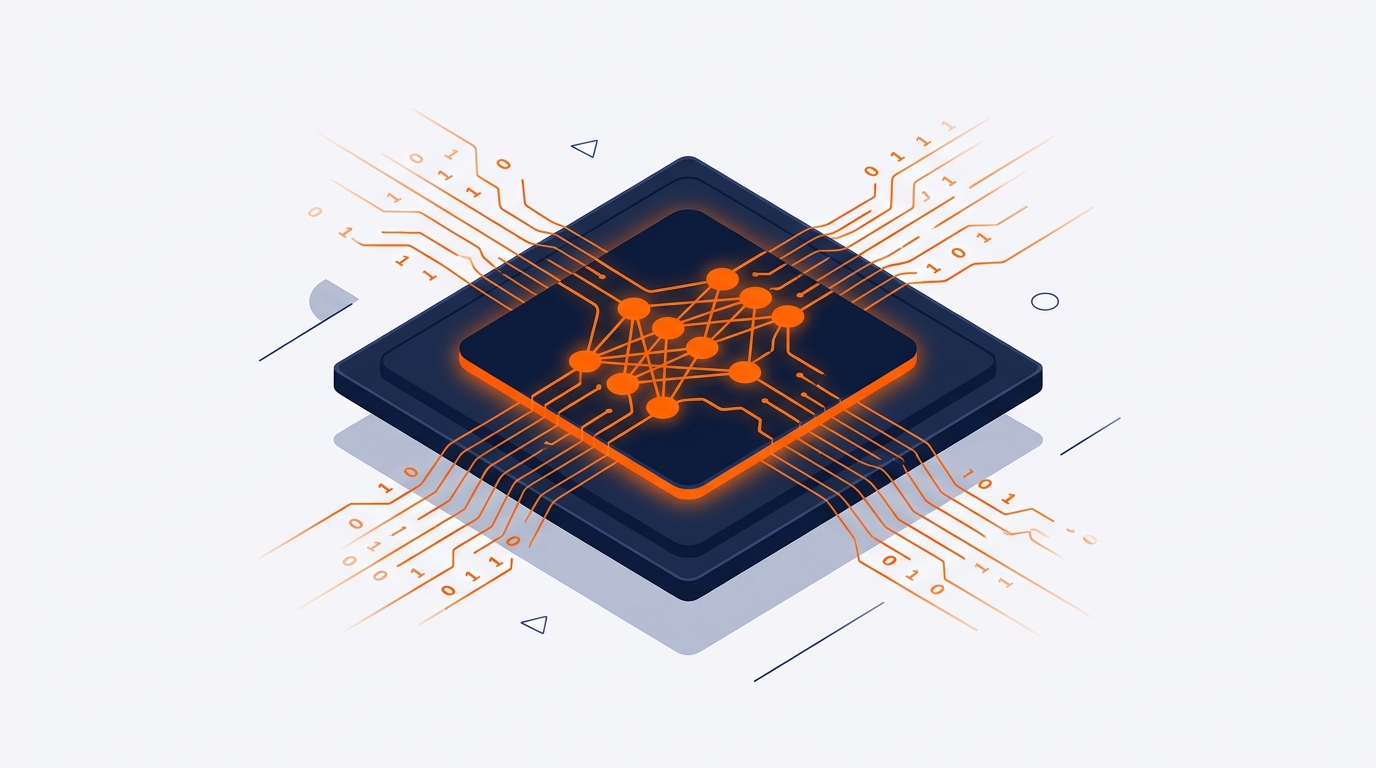
The AI PC era is no longer a future promise — it is being built into mainstream hardware right now. AMD unveiled the Ryzen AI 400 series processors at CES 2026 (mobile) and expanded the lineup at Mobile World Congress 2026 (desktop and Ryzen AI PRO 400 series), delivering a generation of chips built from the ground up to run AI workloads locally — on your device, without a cloud connection, with data that never leaves your machine.
The headline specification is the XDNA 2 neural processing unit (NPU) integrated into every Ryzen AI 400 chip, delivering up to 50 TOPS (desktop) and 60 TOPS (PRO mobile) of dedicated AI compute. But the full picture of what the Ryzen AI 400 series represents — both for consumers and professionals evaluating AI hardware — goes beyond any single spec number. Here is the complete breakdown.
The Architecture: Zen 5 + RDNA 3.5 + XDNA 2 — AMD's AI PC Platform
The Ryzen AI 400 series is built on TSMC's 4nm process and integrates three distinct compute engines into a single chip:
Zen 5 CPU cores — AMD's latest generation processor cores, offering up to 12 cores in mobile configurations with boost clocks reaching 5.2 GHz and up to 36MB of combined L2+L3 cache. Memory support on higher-end SKUs extends to 8,533 MT/s, one of the fastest LPDDR5X speeds in consumer mobile silicon. The Zen 5 architecture delivers meaningful real-world performance improvements over Zen 4, particularly in integer performance and AI-adjacent workloads like vector operations and matrix math.
RDNA 3.5 integrated GPU — AMD's latest integrated graphics architecture, optimized for both gaming and GPU-accelerated AI inference. On desktop, the integrated Radeon graphics deliver an average of 12% higher FPS at 1080p compared to previous-generation integrated graphics, making the Ryzen AI 400 series competitive for light gaming without a discrete GPU.
XDNA 2 NPU — The dedicated neural processing unit at the center of AMD's AI PC strategy, delivering up to 50 TOPS on desktop and 60 TOPS on the Ryzen AI PRO 400 mobile variants. The XDNA 2 is purpose-built for the types of AI inference workloads that are increasingly common on modern PCs: real-time video processing, speech recognition, language model inference, background removal, noise suppression, and AI-accelerated productivity features.
All three engines can run simultaneously and independently — meaning an AI inference task on the NPU does not compete with CPU or GPU workloads for compute resources.
The TOPS Number: What 50-60 TOPS Actually Means
TOPS — Trillions of Operations Per Second — has become the standard unit for measuring NPU performance in AI PCs, but understanding what the numbers actually mean in practice requires some context.
Microsoft's Copilot+ PC certification requires a minimum of 40 TOPS from a device's NPU to qualify for the program and access the full suite of AI-powered Windows features. At 50 TOPS (desktop) and 60 TOPS (PRO mobile), the Ryzen AI 400 series clears this threshold with significant headroom — more than the original Ryzen AI 300 series, which introduced AMD's first generation of Copilot+ compatible NPUs, and competitive with Qualcomm's Snapdragon X Elite in raw NPU throughput.
What does 60 TOPS enable in practice?
- Windows Studio Effects: Real-time background blur, eye contact correction, voice focus, and automatic framing for video calls — all running locally on the NPU without GPU or CPU overhead
- Local AI model inference: Running compressed large language models (7B-13B parameter models at various quantization levels) locally without internet access, keeping sensitive data entirely on-device
- Cocreator and AI image generation: AI-powered creative tools in Windows that generate and edit images on-device at speeds that require dedicated NPU acceleration
- AI-accelerated productivity tools: Applications like Microsoft Copilot in Office (for eligible subscribers) can increasingly offload inference tasks to the local NPU rather than the cloud, reducing latency and operating in offline scenarios
- Real-time transcription and translation: Local speech processing that runs without sending audio to cloud servers — relevant for privacy-sensitive professional use cases
The 60 TOPS ceiling is not currently a constraint on what software can do — most consumer AI applications today are designed around 40-50 TOPS hardware. But as AI application complexity grows and local model sizes increase, the headroom matters.
Performance vs. Intel: The Competitive Context
AMD is competing directly with Intel's Core Ultra 200 (Lunar Lake) series in the AI PC laptop market, and the Ryzen AI PRO 400 claims a clear performance lead on key benchmarks:
- Up to 30% faster multithreaded performance compared to Intel Core Ultra X7 358 — Intel's direct competitive SKU in the business laptop segment
- Up to 1.3x faster multitasking compared to Intel Lunar Lake / Core Ultra 200 in general workloads
- Up to 1.7x faster content creation compared to the same Intel lineup on content creation benchmarks
These numbers are AMD's own figures and will need independent third-party validation as system availability increases in Q2 2026 — but they reflect a consistent pattern from Ryzen AI 300 reviews, where AMD's Zen 5 architecture delivered competitive or superior CPU performance to Intel's equivalent laptop tier while matching or exceeding NPU throughput.
For the desktop Ryzen AI 400 series, AMD offers 65W standard models and 35W "E" suffix efficiency variants — the latter targeting small form factor systems, home theatre PCs, and enterprise deployments where power consumption is a constraint. The desktop lineup fills a gap in the market: dedicated NPU performance (up to 50 TOPS) in a desktop form factor, previously available only in laptop-class silicon.
Systems featuring both the desktop and PRO mobile Ryzen AI 400 series are expected to become available from major OEM partners in Q2 2026.
On-Device AI and Privacy: Why Local Inference Matters
The Ryzen AI 400 series is arriving at a moment when the question of where AI inference happens is becoming as important as the question of what AI can do.
Every AI interaction that requires a cloud connection involves sending data — text, audio, images, or behavioral signals — to a server operated by a third party. For many consumer use cases, this trade-off is acceptable. For enterprises and professionals handling sensitive data — medical records, legal documents, financial information, proprietary business data — it is often not.
Local NPU inference changes this equation. When an AI model runs on the XDNA 2 NPU inside a Ryzen AI 400 processor:
- Data never leaves the device — audio processed by local speech recognition, documents analyzed by local language models, images processed by local AI tools all remain entirely within the hardware
- Inference works offline — AI-powered features do not require an internet connection, making them available in low-connectivity environments
- Latency is dramatically lower — local inference eliminates the round-trip to a cloud server, delivering responses in milliseconds rather than the variable latency of cloud API calls
- Costs are fixed — rather than per-token API charges that scale with usage, local inference runs at zero marginal cost once the hardware is purchased
For enterprises evaluating AI tools, local NPU inference on Copilot+ PCs represents a meaningful expansion of what is deployable. Workflows that were blocked by data privacy requirements on cloud AI tools become viable when execution is local. This is one reason the Ryzen AI PRO 400 series — designed with enterprise IT management features — includes the highest NPU throughput in the lineup.
What This Means for Professionals Building with AI
The Ryzen AI 400 series is hardware news, but it has direct implications for how professionals and businesses think about AI tool deployment in 2026.
The AI PC is no longer a premium category. A generation ago, meaningful NPU performance was confined to the most expensive laptops. The Ryzen AI 400 series brings 50-60 TOPS to mainstream price points, which means the gap between AI-capable and AI-capable-at-scale hardware is narrowing rapidly. Within 18-24 months, most new PCs shipping from major manufacturers will include this class of NPU.
Local AI inference unlocks use cases that cloud AI cannot. For professionals in regulated industries — healthcare, finance, legal, government — the local inference capability of Ryzen AI 400 devices opens the door to AI tools that strict data handling requirements previously blocked. If you have been waiting for AI-powered document analysis, transcription, or code assistance that does not require sending client data to a third-party server, this hardware generation is where that becomes practical.
Prompt engineering and model evaluation become device-specific skills. As AI practitioners increasingly work with locally-deployed models running on NPU hardware, understanding how model size, quantization, and context length interact with NPU throughput becomes a practical competency — not a theoretical one.
If you are building the AI literacy to work effectively with this generation of tools — cloud and local, agentic and conversational — FireStart's Applied AI & Automation Program is the structured path to do it. Explore the Guides library with Ember AI to get started, or enroll in Cohort 3 for hands-on instruction and professional certification.
Want to learn more about AI?
Join InLoop free — explore guides, connect with creators, and drop into live voice rooms.